



The Tech That Quietly Took Over Everyday Life: Inside the Convergence of CES 2026
The Consumer Electronics Show (CES) has historically been a playground for the spectacular—an annual showcase of neon-soaked concept cars, massive televisions destined for storage lockers, and experimental hardware designed primarily for press headlines. However, CES 2026 marked a profound psychological and structural pivot in the consumer electronics landscape.
Held from January 6th to 9th, 2026, in Las Vegas, Nevada, the event delivered a distinct warning shot from the future. The overarching theme was not the loud debut of isolated gadgets, but rather the quiet, permanent integration of advanced technology into the fabric of daily life.
Across the sprawling halls of the Las Vegas Convention Center, the boundary between software and physical space dissolved. Artificial intelligence shed its digital-only confinement, migrating into humanoid machinery, context-aware wearable rings, level 4 autonomous vehicles, and highly responsive tactile interfaces. CES 2026 was the definitive moment technology stopped pretending to be a futuristic novelty and started operating as permanent public and personal infrastructure.
The Humanoid Shift: From Scripted Performers to Adaptive Observers
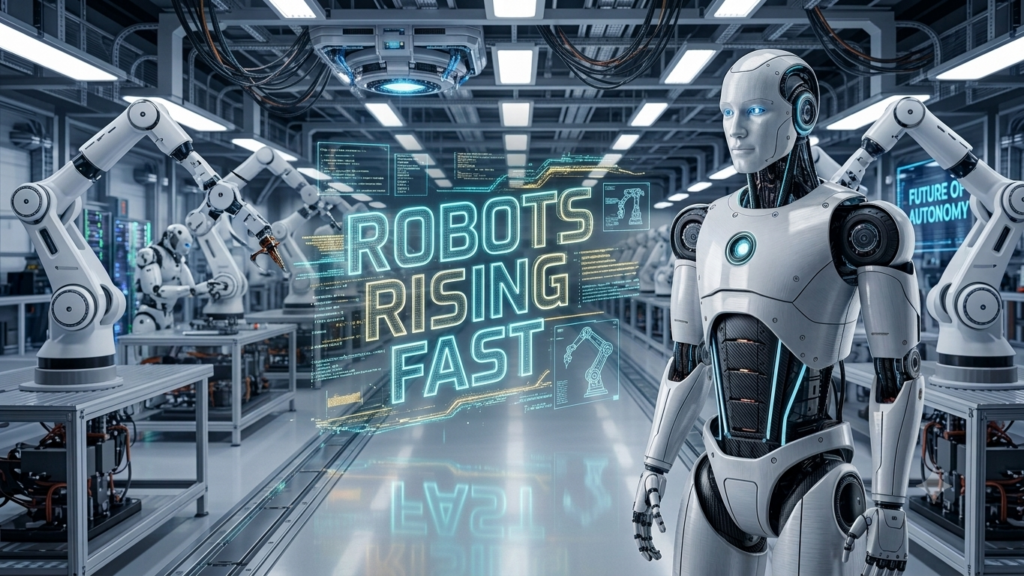
For years, robotics at trade shows relied on highly curated, heavily scripted routines. Humanoid models were safely cordoned off behind velvet ropes, executing pre-programmed movements optimized for social media clips. In Las Vegas, that paradigm was thoroughly shattered by robotics firms introducing machines built for emotional nuance and cognitive endurance.
+--------------------------+-----------------------+-----------------------------+
| Robot Model              | Primary Capability     | Target Environment          |
+--------------------------+-----------------------+-----------------------------+
| Engineered Arts "David"  | Emotional Nuance      | Enterprise & Hospitality    |
| Boston Dynamics Atlas    | Heavy Industrial Lift | High-Risk/Dangerous Work    |
| Unitree / Engine AI      | Athletic/Martial Arts | Public & Commercial Spaces  |
+--------------------------+-----------------------+-----------------------------+
The Emotional Realism of Engineered Arts’ David
Engineered Arts shifted the conversation surrounding artificial empathy with their latest humanoid model, David. Rather than focusing solely on mechanical fluidity, David utilizes an advanced AI vision pipeline to observe human behavior in real time.
The robot does not simply react; it interprets vocal tones, shifts its posture defensively or welcomingly, and maintains eye contact with striking intent. Because it remembers past interactions and adapts its facial expressions based on contextual cues, David marks a transition from a pre-recorded performer to a highly adaptive social observer. Engineered for enterprise environments, these units plug directly into dedicated power grids to ensure continuous, uninterrupted corporate operations.
Boston Dynamics’ Atlas Transitions to Commercial Deployment
Concurrently, Boston Dynamics demonstrated that their iconic Atlas platform is rapidly nearing true commercial deployment. Standing over six feet tall and built as a working machine rather than a viral marketing tool, Atlas demonstrated its capacity to lift 110 pounds across highly uneven terrain.
Crucially, the unit features an autonomous four-hour battery swap routine, minimizing human intervention in high-risk zones. The engineering philosophy behind Atlas has evolved: it is explicitly designed to handle repetitive, dangerous tasks that humans should not have to perform, prioritizing industrial safety over human displacement.
Unitree and Engine AI Normalizing Public Infrastructure
Meanwhile, Unitree and Engine AI focused their presentations on mechanical dexterity and public familiarity. By showcasing humanoids performing complex kickboxing, kung fu, and synchronized dance routines learned directly from professional athletes, they proved that weight transfer and reaction speeds have reached near-human thresholds.
In China, these models are already executing transitions out of testing labs and into commercial infrastructure, operating seamlessly as mall guides and receptionists. The ultimate objective of these displays is not athletic spectacle, but the normalization of human-robot interactions in everyday public settings.
Invisible Augmentation: The Reality of Screenless Computing
Augmented reality has historically suffered under the weight of bulky, unoptimized headsets that alienate users from their immediate surroundings. The hardware showcased at CES 2026 proved that the next generation of spatial computing will be virtually invisible, blending seamlessly into traditional fashion profiles.
Even Realities G2: The 36-Gram Spatial Standard
The standout hardware in the ambient computing sector was undoubtedly the Even Realities G2 AR glasses. Weighing a mere 36 grams, the G2 utilizes magnesium and titanium frames that are indistinguishable from standard, premium prescription eyewear.
Even Realities G2 Physical Profile:
[ Magnesium/Titanium Frame ] ---> 36 Gram Total Weight ---> Camera-Free Architecture
By intentionally omitting a camera, Even Realities eliminated the social friction and privacy concerns that plagued previous smart eyewear. Instead, the G2 projects a clear, heads-up monochronic data layer directly into the user’s line of sight via proprietary waveguide tech. Information surfaces contextually:
Spoken conversations are transcribed dynamically in real time.
Foreign languages translate instantly during live dialogue.
Schedules, weather data, and health metrics appear only when required.
Priced competitively at $599, the G2 shifts AR away from experimental developer kits and firmly into mainstream consumer adoption. Control is managed via a subtle frame touchpad or through a companion smart ring, ensuring computing remains entirely private.
Retaining Form and Function Without the Friction
The true triumph of the G2 lies in its holistic approach to daily life. By maintaining a completely natural aesthetic, users can access continuous cognitive assistance—such as teleprompter notes during a presentation or turn-by-turn navigation during a commute—without breaking eye contact or signaling to the outside world that they are interacting with a digital interface.
Micro-Aviation and the Inhabited Sky
The drone market has historically split down a rigid line: complex, heavy hardware for professional filmmakers, and fragile toys for casual hobbyists. The anti-gravity A1 drone challenged this binary by radically lowering the technical barrier to entry while elevating the experiential quality of personal flight.
       [ Anti-Gravity A1 Drone ]
                  │
          ┌───────┴───────┐
          ▼               ▼
   < 250g Weight   360° Camera Array
          │               │
          └───────┬───────┘
                  ▼
    [ Immersive FPV Goggles ]
                  │
                  ▼
     "Inhabiting the Sky" Experience
Weighing under 250 grams, the A1 intentionally avoids the strict licensing and registration thresholds enforced by aviation regulatory bodies in multiple global regions. Rather than forcing the operator to constantly chase cinematic frames via standard joysticks, the A1 utilizes a continuous 360-degree camera array that captures the entirety of the surrounding environment simultaneously.
When paired with motion-tracking immersive goggles and an intuitive, one-handed controller, the operational paradigm shifts completely. The user no longer feels like they are piloting an external piece of equipment; instead, the system creates a visceral sensation of being physically projected into the air. By treating aerial imaging as a direct sensory experience rather than technical filmmaking, the A1 democratizes personal flight.
The Maturation of AR Gaming: Pipelines and Refresh Rates
While virtual reality continues to struggle with user isolation, augmented reality gaming demonstrated at CES 2026 that it has achieved long-sought commercial legitimacy. The focus has moved away from simple tech demos to true ecosystem expansion.
Expanding the Field of View with XRA XR1s
XRA introduced the XR1s, a hardware iteration focused entirely on expanding the field of view and optimizing optical clarity while aggressively driving down manufacturing costs. By solving the narrow viewing angles that destroyed immersion in earlier iterations, the XR1s establishes a baseline for mass market gaming adoption.
The Ultra-Smooth ROG Xreal R1
Taking performance a step further, the ROG Xreal R1 debuted with an unprecedented 240 Hz refresh rate tailored specifically for augmented spatial environments. This extreme refresh rate eliminates the microscopic motion latency that frequently causes nausea in high-speed gaming scenarios.
Resolving the Legacy Content Problem
The most critical breakthrough presented by these systems is not the display hardware itself, but the underlying software conversion pipelines. Rather than waiting for developers to build expensive AR titles from scratch, these systems use real-time spatial processing to transform standard 2D games into rich, stereoscopic 3D environments before the light reaches the player’s eye.
A high-speed racing game, for instance, instantly morphs into an authentic cockpit simulation with accurate depth perception. Backed by teased development partnerships with Google and Qualcomm, the AR gaming landscape has officially transitioned from chasing industry legitimacy to quietly securing it.

Ambient Audio and the Open-Source Cognitive Layer
The conversation surrounding AI wearables took a controversial, yet highly pragmatic turn with the introduction of OMI. Worn comfortably around the neck, OMI is an ambient audio hardware device that listens to its user’s environment continuously.
[ Continuous Environmental Audio ]
               │
               ▼
        [ OMI Wearable ]
               │
   ┌───────────┼───────────┐
   ▼           ▼           ▼
Summaries  Action Items  Memories
               │
               ▼
[ Open-Source / Developer-Led Data Control ]
The device automatically records everyday conversations, generates concise summaries, isolates actionable tasks, and archives contextual memories to a personal database. While previous iterations of ambient trackers failed due to restrictive software ecosystems and corporate secrecy, OMI addresses consumer hesitation through total architectural openness.
The platform is completely open-source, heavily developer-friendly, and transparent regarding data sovereignty. Users retain granular control over exactly what data is processed, stored locally, or permanently deleted.
Rather than functioning as an isolated novelty gadget, OMI features native integrations out of the box with professional ecosystems like Slack, GitHub, enterprise calendars, and custom developer API webhooks. By acting as an external cognitive layer that runs silently in the background, it alters how professional workflows are tracked without requiring users to constantly look at a smartphone screen.
Level 4 Autonomy Enters the Driveway
Autonomous driving has long been discussed as a communal utility—a fleet service owned by massive rideshare networks or public transit systems. Tensor fundamentally upended this narrative by showcasing a personally owned, consumer-facing Level 4 autonomous vehicle.
+---------------------------+-----------------------------------+
| System Component          | Technical Specification           |
+---------------------------+-----------------------------------+
| Processing Architecture   | 8x NVIDIA Thor Systems            |
| Computational Throughput  | 8,000 TOPS                        |
| Sensor Matrix             | 37 Cameras & 11 Radar Modules     |
| Automation Standard       | True Level 4 (Private Ownership)  |
+---------------------------+-----------------------------------+
This vehicle is not tied to a recurring mobility subscription or a geofenced fleet network; it is an asset purchased directly by the individual consumer. The vehicle’s processing architecture is anchored by eight NVIDIA Thor chips delivering a massive 8,000 TOPS of computational throughput. This processing core is fed by a dense sensor matrix consisting of 37 cameras and 11 radar modules.
The vehicle does far more than navigate lane lines; it actively predicts volatile pedestrian traffic patterns, synchronizes with the owner’s personal calendars to manage route timing, self-cleans its interior cabins, and communicates its intent to surrounding pedestrians via external digital chassis displays.
When the steering wheel automatically retracts into the dashboard upon entering autonomous zones, any initial operator hesitation vanishes. The shift from public experimentation to private, highly localized luxury ownership is arriving far faster than regulatory bodies or legacy automotive manufacturers initially anticipated.
The Dynamic Screen: Lenovo’s Rollable Ecosystem
For the past decade, productivity laptops and mobile devices have been constrained by rigid, static form factors. Users requiring large screen real estate were forced to tether themselves to heavy external monitors or carry multiple devices. Lenovo used CES 2026 to prove that displays no longer need to remain locked in fixed dimensions.
       [ Lenovo Rollable Tech ]
                  │
       ┌──────────┴──────────┐
       ▼                     ▼
[ ThinkPad XD ]       [ Legion Pro Concept ]
 13.3" to 16"          Stretches Horizontally
Vertical Expansion      Up to 24" Ultra-Wide
ThinkPad Rollable XD
The ThinkPad Rollable XD redefines mobile office workflows. With a simple upward swipe gesture, the internal mechanical drive smoothly expands the screen vertically from a compact 13.3-inch display to a spacious 16-inch workspace. This vertical expansion provides programming developers, data analysts, and writers with massive vertical real estate without increasing the physical footprint of the laptop chassis.
Legion Pro Concept
For immersive media environments, the Legion Pro Concept showcases horizontal expansion capabilities. The display stretches outward to create a panoramic, near-24-inch ultra-wide gaming and editing canvas.
Addressing long-standing concerns regarding the durability of flexible polymers, Lenovo explicitly rated these displays for 25,000 seamless roll cycles. By framing this technology as a rugged, modular tool rather than a delicate experimental display, flexibility transitions from an expensive luxury gimmick to a baseline expectation for modern mobile workforces.
Haptic Integration and the Dissolution of Digital Barriers
The final frontier of true technological convergence is not visual fidelity or acoustic clarity; it is the replication of physical touch. The WEART Touchdiver Pro haptic gloves provided what many attendees considered the most visceral and psychologically jarring experience of the entire show.
[ Virtual Object Interaction ]
               │
               ▼
     [ Touchdiver Pro ]
               │
   ┌───────────┼───────────┐
   ▼           ▼           ▼
Thermal     Textural    Force/Rigidity
The Touchdiver Pro does not merely vibrate to signify a digital collision. Instead, it utilizes an intricate array of thermal and force-feedback actuators to render the exact physical characteristics of digital objects with terrifying accuracy. When interacting with an asset in a virtual space:
Digital stone feels distinctly cool to the skin and rough in texture.
Polished metal presents immediate, rigid structural resistance.
Virtual heat sources emit localized thermal energy that becomes genuinely uncomfortable if the hand remains too close.
When authentic thermal properties, micro-textures, and structural resistance enter virtual spaces, the user crosses a profound psychological threshold. Digital environments stop feeling like abstract visual simulations and begin registering to the human brain as physical reality. The Touchdiver Pro suggests that the final barrier separating our physical lives from digital space is rapidly dissolving.
The Silent Convergence
Looking back at the innovations that defined Las Vegas from January 6th to 9th, it is clear that CES 2026 was never about individual breakout products. Its true significance lay in the profound convergence of previously isolated technological sectors.
Artificial intelligence is no longer trapped behind a web browser window; it has successfully integrated with the mechanical skeletons of humanoids, the optical lenses of everyday eyewear, and the processing brains of our personal vehicles. Technology is actively becoming quieter, more deeply personalized, and incredibly permanent. The innovations showcased throughout the event are no longer anticipating the future—they are silently constructing the invisible infrastructure of the world we already live in.
Frequently Asked Questions
What were the exact dates and location of CES 2026?
CES 2026 took place from January 6th to January 9th, 2026. The event was held across the Las Vegas Convention Center and various satellite exhibition halls throughout Las Vegas, Nevada.
What makes the Even Realities G2 smart glasses different from older AR headsets?
The Even Realities G2 stands out by weighing only 36 grams and using slim magnesium and titanium frames that look identical to high-end prescription glasses. Furthermore, it features a completely camera-free architecture to eliminate social friction and privacy anxieties, focusing purely on projecting a helpful, ambient text layer directly into the wearer’s view.
How does the Level 4 autonomous vehicle by Tensor differ from existing rideshare options?
Tensor’s Level 4 autonomous vehicle is built explicitly for private consumer ownership rather than a shared commercial fleet network or a geofenced subscription model. It operates via 8 NVIDIA Thor chips providing 8,000 TOPS of computational power, allowing the vehicle to seamlessly navigate, predict traffic patterns, and self-clean without any human intervention.
Are rollable displays durable enough for long-term daily professional use?
Yes. As demonstrated by Lenovo’s new rollable laptop ecosystem, these dynamic displays are rated for over 25,000 continuous roll cycles. This ensures that the internal mechanical drives and flexible display polymers can survive years of constant expansion and contraction in real-world working conditions.
How do haptic gloves like the Touchdiver Pro create realistic physical sensations?
The WEART Touchdiver Pro gloves utilize highly sophisticated thermal actuators and force-feedback mechanisms. Instead of simple vibrations, they dynamically alter temperature, surface texture feel, and mechanical resistance, allowing the user’s hand to perceive digital stone as cold and rough, or digital metal as completely rigid.